

Listen to David Vermijs, Director of Business Engagement at Shift

This episode of Frankly Speaking welcomes David Vermijs and discusses the final draft of the first set of European Sustainability Reporting Standards (ESRS).
The draft Delegated Act from the European Commission is currently subject to a feedback period until the 7th of July. He is also a member of EFRAG's Sustainability Reporting Board, the body which undertakes the technical work to recommend the new sustainability reporting standards.
You will hear more about:
“Some of the biggest leaders in our world, including indeed the president von der Leyen, also President Biden, Emmanuel Macron gave this very message, saying that, yes, we need a transition, but we need a transition towards a climate neutral economy leaving no one behind. We got to make sure that that also comes through in the reporting standards. We do want the reporting to be meaningful and to be representative of what's happening in practice.”


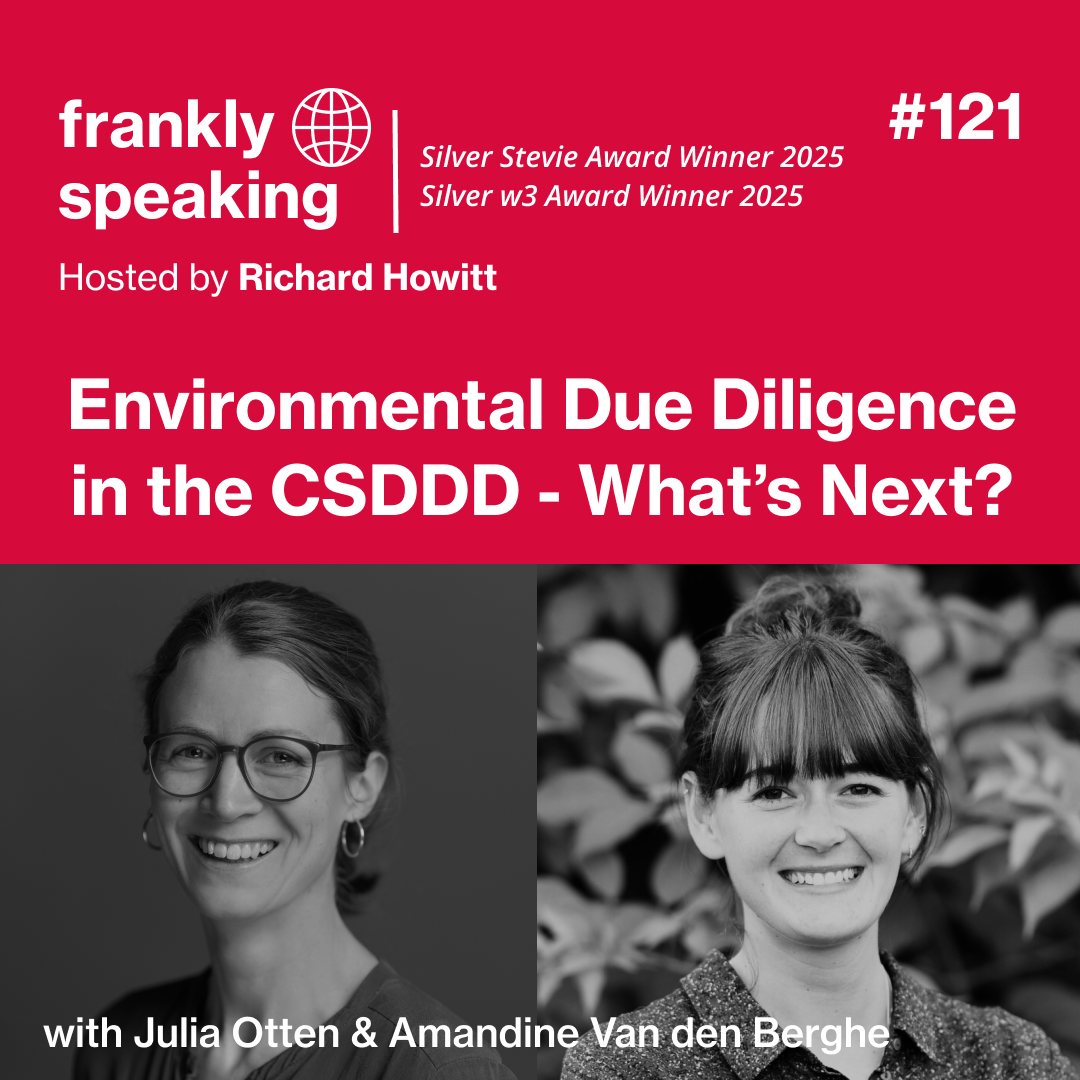

What does meaningful implementation of the Corporate Sustainability Due Diligence Directive look like in practice? Listen to Julia Otten, Senior Policy Officer at Frank Bold, and Amandine Van Den Berghe, Senior Lawyer specialising in value chains, trade and investment at ClientEarth.
.webp)
What role should banks play in society? Listen to Anna Koolstra, Advocacy Manager, Impact and Economics at Triodos Bank
.webp)
What does the European Environment Agency have to say about Europe's progress on climate change so far? Listen to its Executive Director, Leena Ylä-Mononen


