

What can traditional Japanese business practice teach us about corporate sustainability? Listen to Akiko Sato, Business and Human Rights Project Officer at the United Nations Development Programme and Special Adviser at the business and human rights NGO Pillar Two
.webp)
What is the relationship between culture and corporate responsibility? How do various social mores and traditions influence how various countries view business and human rights? And what can different nations learn from each other on their sustainability journey?
This week on the Frankly Speaking podcast, Richard Howitt was joined by Akiko Sato, Business and Human Rights Project Officer at the United Nations Development Programme and Special Adviser at the NGO Pillar Two to explore the state of responsible business in Japan, from the Edo dynasty until today.
Together they discussed the Japanese government’s human rights supply chain due diligence guidelines, as well as how companies in Japan have been responding. You’ll also hear more about:


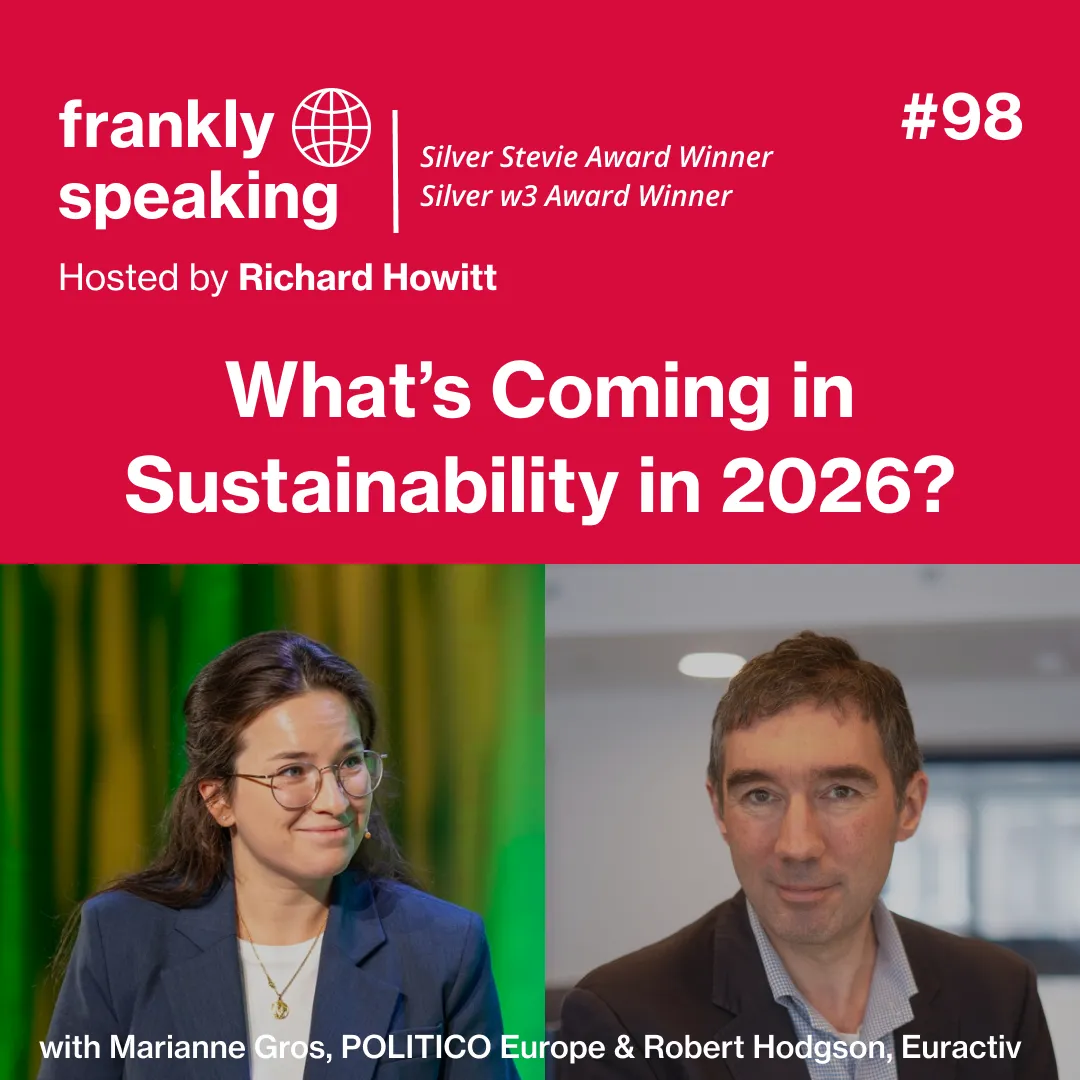

What's coming up in the sustainability field this year? Listen to Marianne Gros, Sustainability Reporter at Politico Europe, and Robert Hodgson, Energy, Environment and Transport Editor at Euractiv
.webp)
Are we inevitably heading towards a post-growth world? Listen to Matt Orsagh, co-founder of the Arketa Institute for Post-Growth Finance and former Senior Director of Capital Markets at the CFA Institute

The final Omnibus 1 text has now been ratified. What now? Listen to Julia Otten, Senior Policy Officer at Frank Bold and Andreas Rasche, Assistant Dean and Professor of Business in Society at Copenhagen Business School


