

What are businesses really saying about EU sustainability legislation? Listen to Ludovic Flandin, Vice-President of WeAreEurope
.webp)
The European Commission says that EU sustainability legislation harms European business competitiveness. But does business really agree?
This week on the Frankly Speaking podcast, Richard Howitt was joined by Ludovic Flandin, Vice-President and Founding Board Member of WeAreEurope, a new association of European sustainability professionals formed earlier this year.
Together they discussed why Ludovic and his colleagues decided to set up WeAreEurope, and the main findings of their recent Europe-wide study on what businesses think about the CSRD and Omnibus proposals. You’ll also hear more about:
Listen in and follow us on LinkedIn!


.png)

What do China’s new supply chain security and counter-extraterritoriality rules mean for European companies trying to conduct human rights and environmental due diligence? Listen to Katja Drinhausen, Head of Programme Politics and Society at the Mercator Institute for China Studies (MERICS).
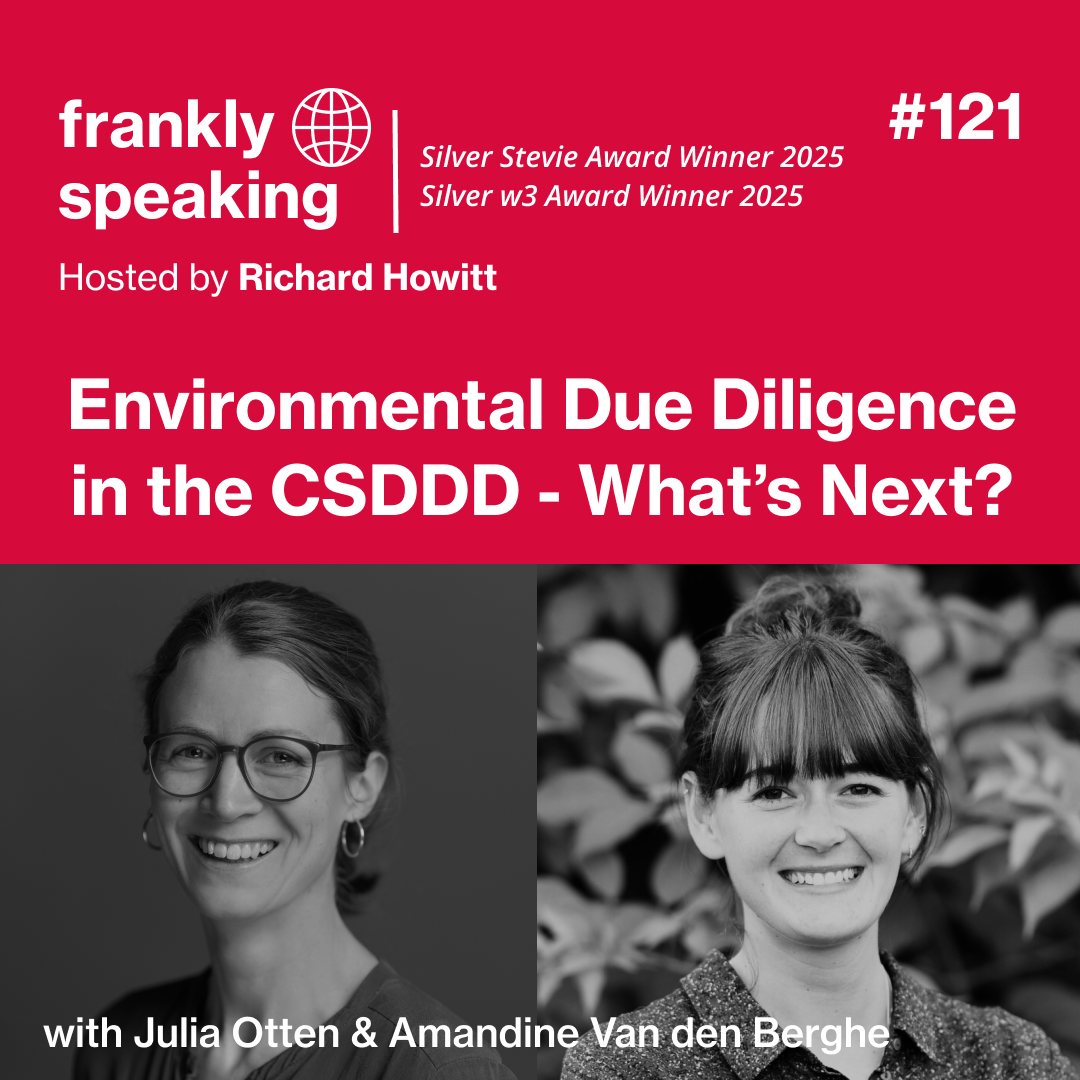
What does meaningful implementation of the Corporate Sustainability Due Diligence Directive look like in practice? Listen to Julia Otten, Senior Policy Officer at Frank Bold, and Amandine Van Den Berghe, Senior Lawyer specialising in value chains, trade and investment at ClientEarth.
.webp)
What role should banks play in society? Listen to Anna Koolstra, Advocacy Manager, Impact and Economics at Triodos Bank


