

Listen to Chloe Cranston, Head of Thematic Advocacy at Anti-Slavery International.

Frankly Speaking has invited one of the leading advocates on responsible business and modern slavery for the non-governmental organisation Anti-Slavery International.
Chloe and ASI have led efforts to address the 1 million mostly Muslim Uyghur population whom human rights groups and journalists report have been imprisoned in so-called re-education camps in China's northwestern region of Xinjiang.
We are discussing what business from the textile or solar sector, financial institutions, policymakers and mainly activists themselves have done and could do to stop forced labour, finding its way into the goods and services which we buy and use.
Listen in and share our conversation!
Resources
“Modern slavery means that someone loses their freedom and is exploited by others for commercial or personal gain. It often happens to the most vulnerable people in society who fall into vulnerable situations. It could be me or you. We lose our jobs, we fall into debt. We're looking for opportunities to provide for our families, and we end up being tricked and exploited into conditions we did not agree to, and we cannot leave.”


.png)

What do China’s new supply chain security and counter-extraterritoriality rules mean for European companies trying to conduct human rights and environmental due diligence? Listen to Katja Drinhausen, Head of Programme Politics and Society at the Mercator Institute for China Studies (MERICS).
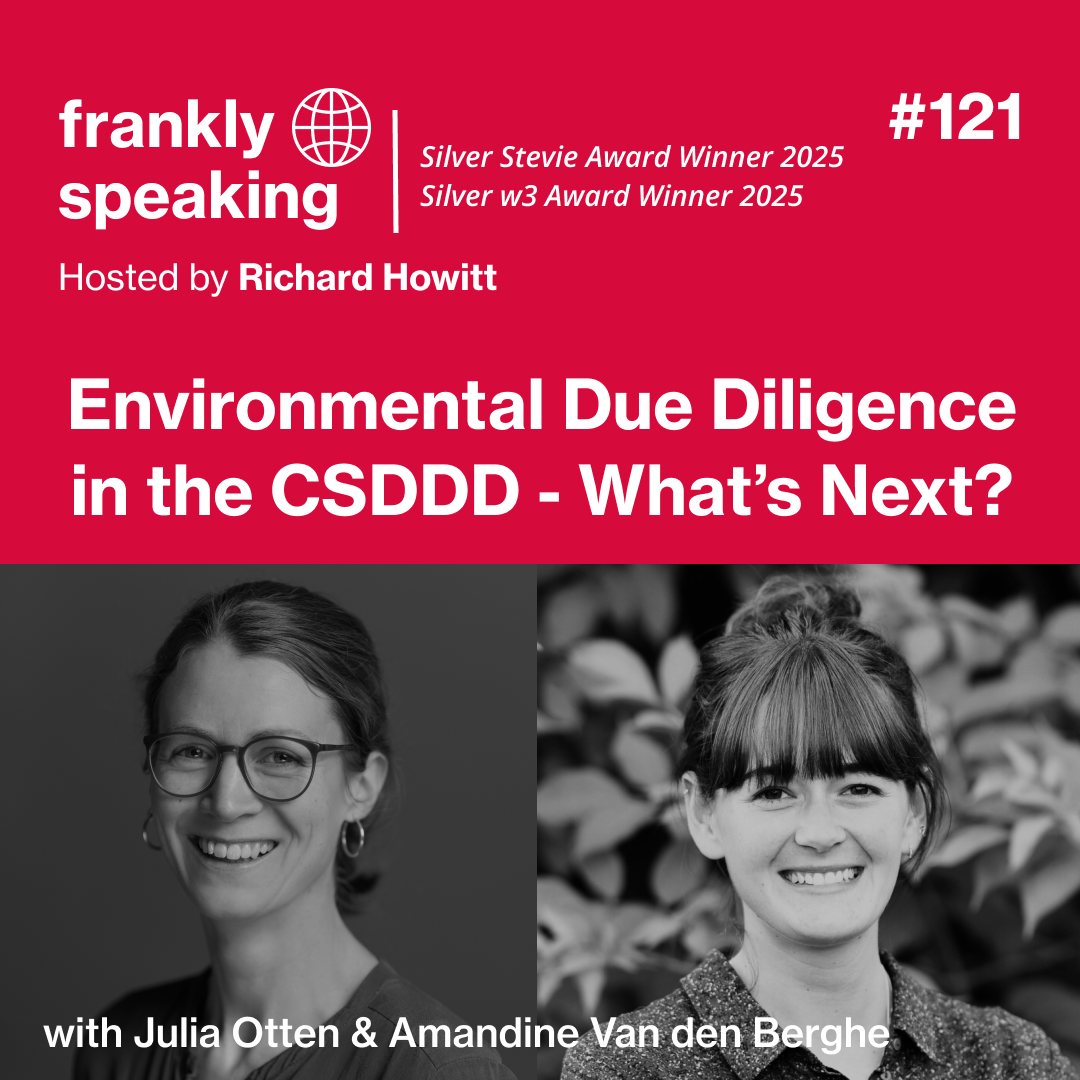
What does meaningful implementation of the Corporate Sustainability Due Diligence Directive look like in practice? Listen to Julia Otten, Senior Policy Officer at Frank Bold, and Amandine Van Den Berghe, Senior Lawyer specialising in value chains, trade and investment at ClientEarth.
.webp)
What role should banks play in society? Listen to Anna Koolstra, Advocacy Manager, Impact and Economics at Triodos Bank


