

Listen to Chloe Cranston, Head of Thematic Advocacy at Anti-Slavery International.

Frankly Speaking has invited one of the leading advocates on responsible business and modern slavery for the non-governmental organisation Anti-Slavery International.
Chloe and ASI have led efforts to address the 1 million mostly Muslim Uyghur population whom human rights groups and journalists report have been imprisoned in so-called re-education camps in China's northwestern region of Xinjiang.
We are discussing what business from the textile or solar sector, financial institutions, policymakers and mainly activists themselves have done and could do to stop forced labour, finding its way into the goods and services which we buy and use.
Listen in and share our conversation!
Resources
“Modern slavery means that someone loses their freedom and is exploited by others for commercial or personal gain. It often happens to the most vulnerable people in society who fall into vulnerable situations. It could be me or you. We lose our jobs, we fall into debt. We're looking for opportunities to provide for our families, and we end up being tricked and exploited into conditions we did not agree to, and we cannot leave.”


.webp)

What can businesses do to eliminate modern slavery? Listen to Johannes Dumay, Professor in Accounting at Macquarie University
.webp)
The Taskforce on Inequality and Social-related Financial Disclosures (TISFD) wants to do for social issues what the TCFD did for climate a decade ago: harness capital markets to drive corporate action, this time on inequality and people-related risk.
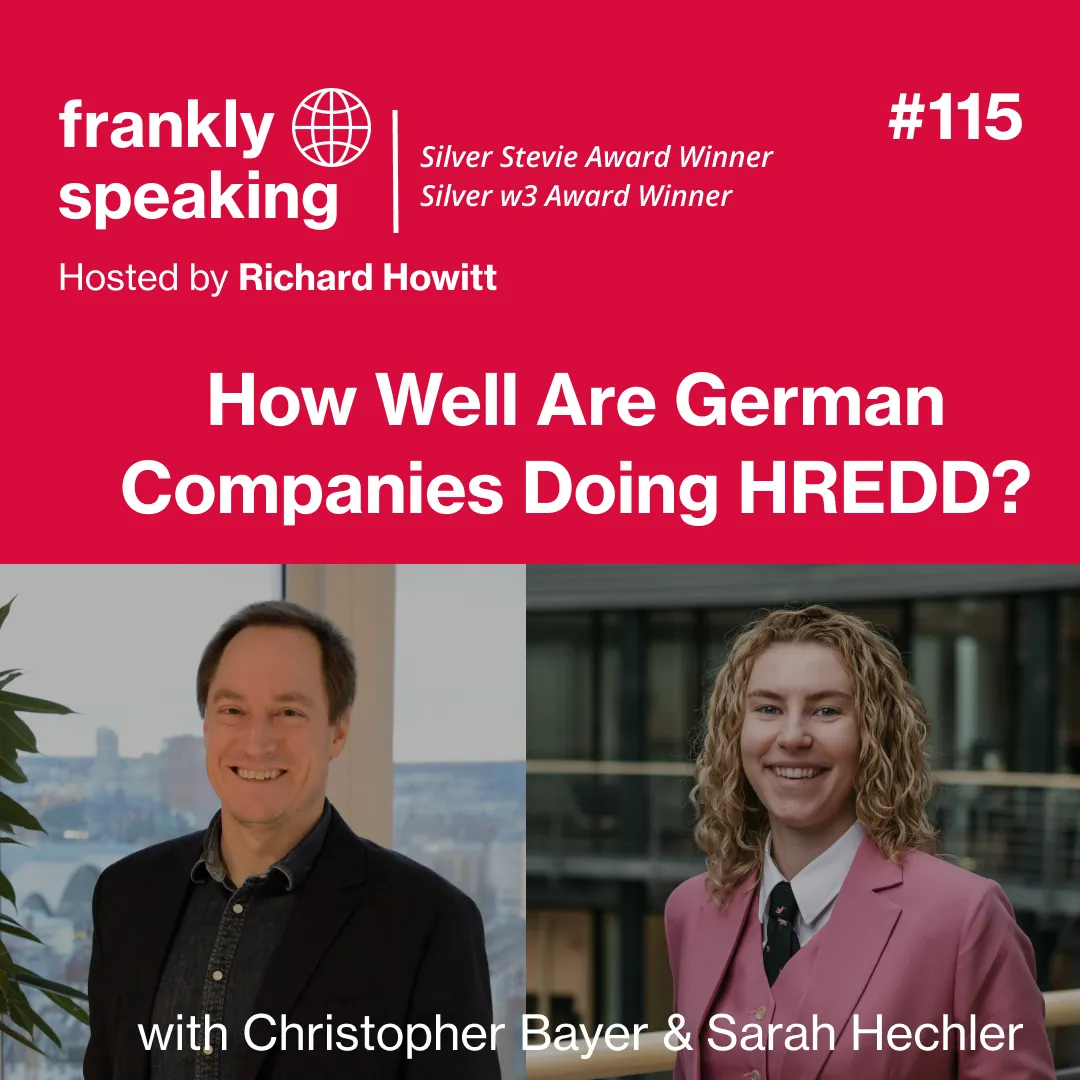
What’s the track record of German companies implementing the LkSG? Listen to Sarah Hechler, previously Social Project Manager at the UN Global Compact Netzwerk Deutschland, and Christopher Bayer, Senior Researcher on the study and Principal Investigator at Development International


