

How can worker-centric models of due diligence help to better protect workers and communities worldwide from human rights abuses?
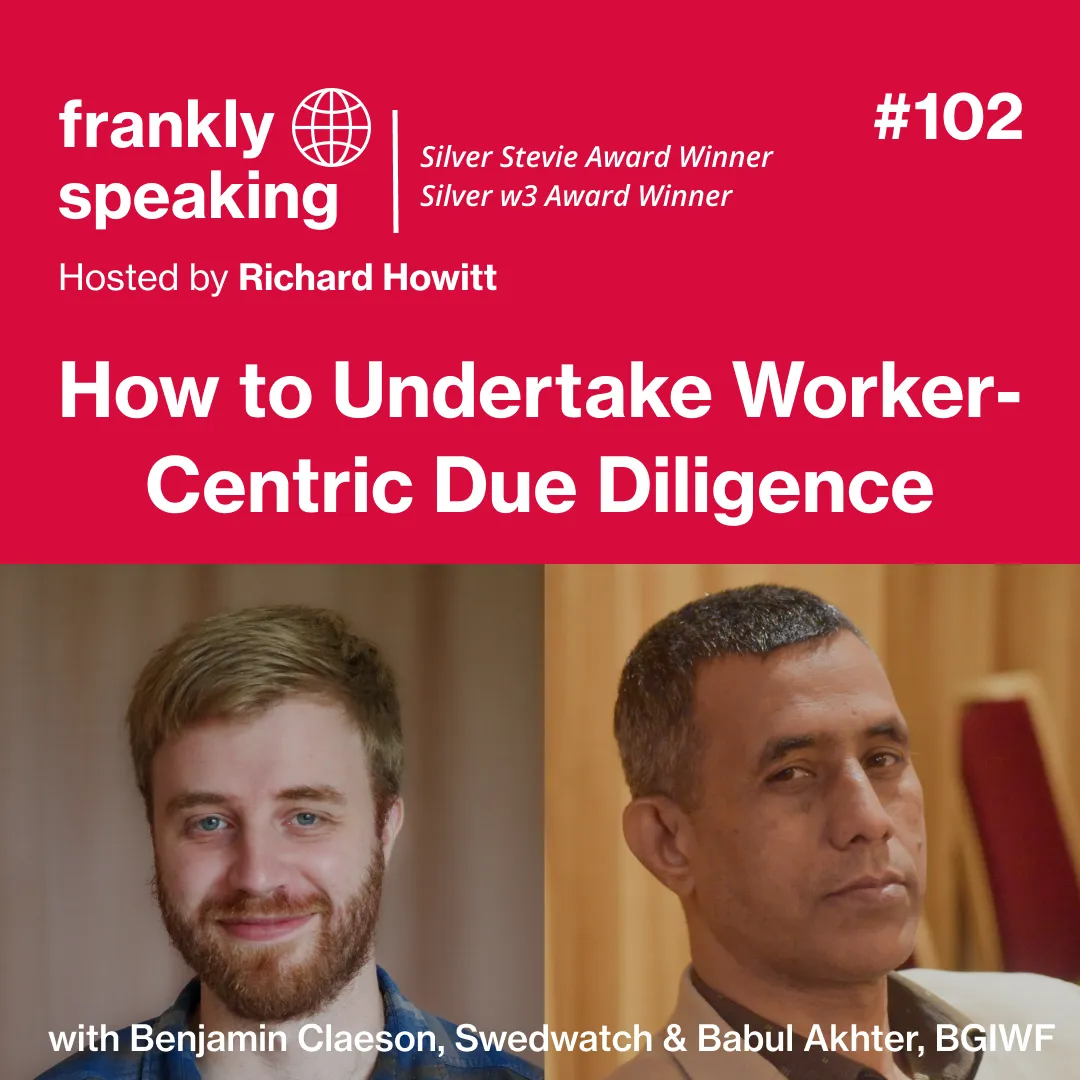
How can companies better integrate worker-centred approaches to their due diligence processes?
In this episode of Frankly Speaking, Richard Howitt was joined by Benjamin Claeson, Programme Officer at the Value Chains Unit at Swedwatch and author of the report “Overdue Diligence” on worker-centred due diligence, as well as Babul Akhter, General Secretary of the Bangladesh Garments & Industrial Workers Federation (BGIWF).
Together they discussed why current efforts towards corporate due diligence are failing to adequately protect workers and communities globally, and how stronger engagement with worker-centred approaches can help bridge this gap. You’ll also hear about:
Listen in and follow us on LinkedIn and Youtube!


.webp)

What has been the experience of first-wave practitioners implementing the EU's sustainability reporting legislation? Listen to Ulrike Sapiro, Chief Sustainability Officer at Henkel
.webp)
What impact will the Omnibus simplification proposals have on banks, and what is their message to European policymakers? Listen to Antoni Ballabriga, Global Head for Sustainability Intelligence and Advocacy at BBVA

What have been the latest developments on the European Commission’s Omnibus proposals and how have companies reacted? Listen to Maria Tymtsias, co-founder of the Palau Project and Frank Bold’s Julia Otten


